招募中創始書food / other
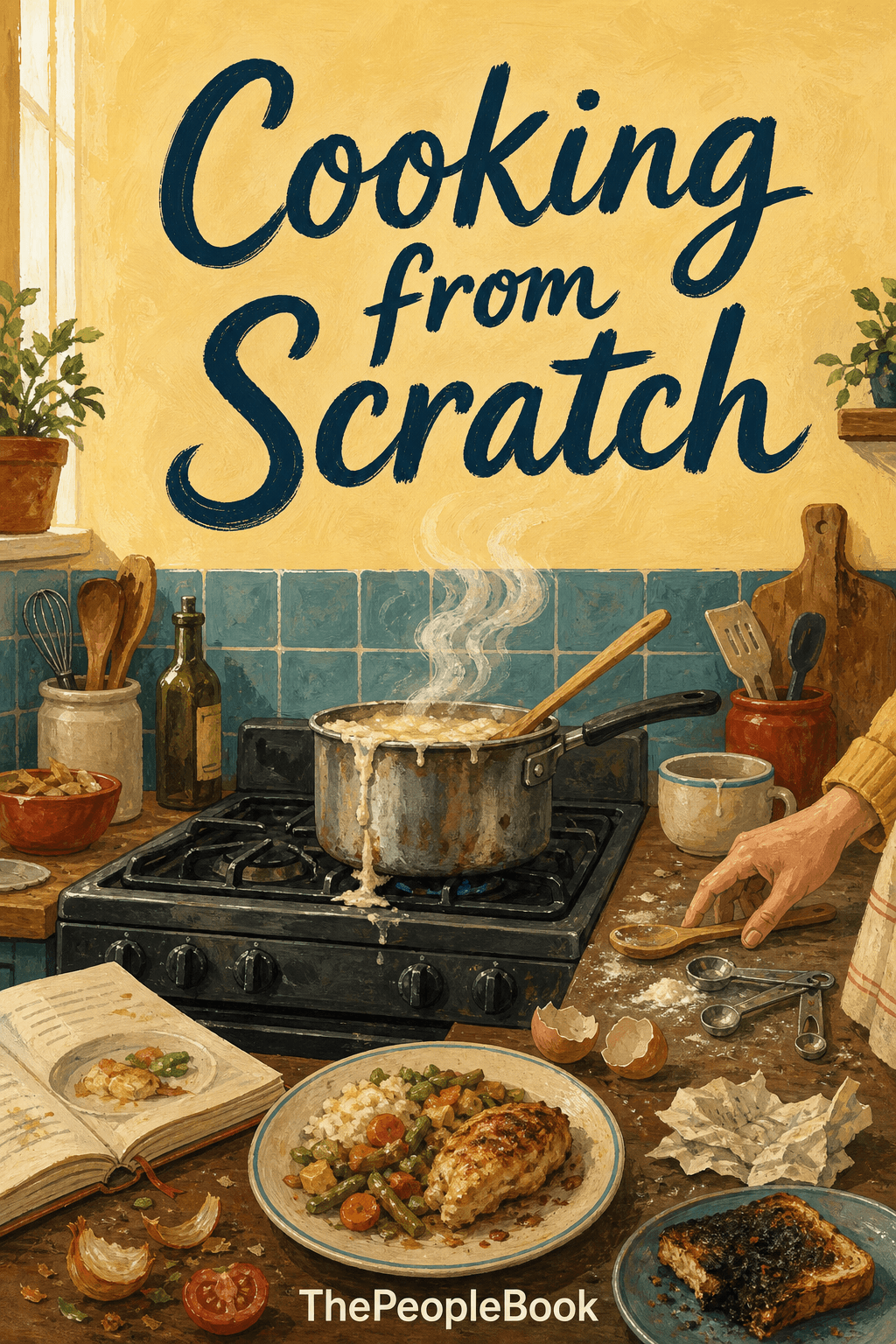
Cooking from Scratch
People on teaching themselves to cook from scratch, disasters included.
People on teaching themselves to cook from scratch, disasters included.
Problem to Solve
Most cooking content online assumes you already know the basics, or gives you a recipe without showing what learning is actually like. If you’re starting from nothing, the questions that matter most often go unanswered: what to learn first, what’s normal to mess up, and how long it takes before a kitchen stops feeling scary.
Unique Value
This book collects first-person accounts from people who taught themselves to cook, from knowing almost nothing to feeding themselves and other people. Each chapter is one person in their own kitchen: the dishes that taught them, and the ones that ended up in the bin. No food-influencer gloss. No “anyone can do this in fifteen minutes.”
What You'll Gain
An honest picture of learning to cook: where to start, what’s normal to get wrong, what finally made things click, and what people now cook without thinking. Not a recipe book, just real accounts to learn alongside.
Most cooking content online is polished: perfect plates, “15-minute” recipes that take an hour, and the feeling that everyone else already knows what they’re doing. The honest version is harder to find: learning to cook when you couldn’t, the failures, and the dish that finally made things click. We think a few of those accounts, collected side by side, would make a book worth keeping. If you taught yourself to cook, however slowly, we’d like your chapter.
Most cookbooks hand you recipes and assume you can already cook. This book is different: a group of people who couldn’t, telling how they learned, burnt dinners and all.
This is an open anthology. We set up the book; contributors write the chapters. Each chapter is one person on how they taught themselves to cook. There’s no fixed format. If you want a starting point, you might cover where you began, what you got wrong, the dish that finally made things click, what nobody told you, and what you cook now. But that’s a suggestion, not a requirement. The slots fill as contributors join.
You know how to cook, whether you learned at home or trained somewhere formal. You understand the parts recipes often skip: when to lower the heat, when to leave something alone, and what beginners are likely to mess up. You do not need a famous name or writing experience. You just need real time in the kitchen, the patience to explain what you know, and the honesty to include the failures too.
You shape the whole book: which accounts make it in, the chapter order, and how they fit together. The book should have a clear point of view, not read like separate posts stitched together. You work with contributors and writers, push for the details that make each story useful, copyedit and proofread each chapter, and keep the book honest and free of food-influencer gloss, without flattening anyone's voice.
You turn someone's experience into a chapter people can read and use. You sit with a home cook who has lived the story but does not know how to put it into words, then draw it out through interviews, notes, voice memos, or a rough draft in any language. You ask the questions that get to the details most people skip. From there, you shape a clear, honest chapter. You send drafts, ask follow-ups, and revise until it feels true to the person who lived it.
This book was started by ThePeopleBook, a platform for collaborative nonfiction. We organize the book and bring contributors together; the writing is theirs. We’re not chefs or food writers. That experience belongs to the people who taught themselves to cook. We’re starting this book to collect honest first-hand accounts of learning to cook from scratch, written by the people who did it. The book is currently looking for a lead. As the team forms, that role, along with full authority over the book, will pass to a suitable contributor. If you’re interested, write to [email protected].
負責人